
Caregiver Support
Supporting a loved one through breast cancer can be both meaningful and overwhelming. Caregivers often take on many roles throughout the journey emotional support system, advocate, driver, scheduler, companion, and caregiver — while also balancing responsibilities at home, work, and within their families.
The Delaware Breast Cancer Coalition (DBCC) recognizes the importance of caregivers receiving support for healing as well.
Whether you are caring for a spouse, parent, sibling, child, or friend, DBCC offers compassionate resources and community connections to help caregivers feel less alone while navigating the challenges of supporting someone through diagnosis, treatment, recovery, and survivorship.
Caregiving often extends far beyond medical appointments and treatment schedules. Many caregivers experience emotional exhaustion, anxiety, stress, difficulty sleeping, and feelings of burnout while trying to support their loved one every step of the way.

Caregiving is important work. thank you for all that you Do!
Supporting yourself is not selfish — it’s an important part of sustainable caregiving.
At DBCC, we believe no one should face breast cancer alone — including caregivers. Through support groups, survivorship programs, peer connection, and educational resources, we are committed to supporting Delaware families throughout every stage of the breast cancer journey.
Join the Conversation!
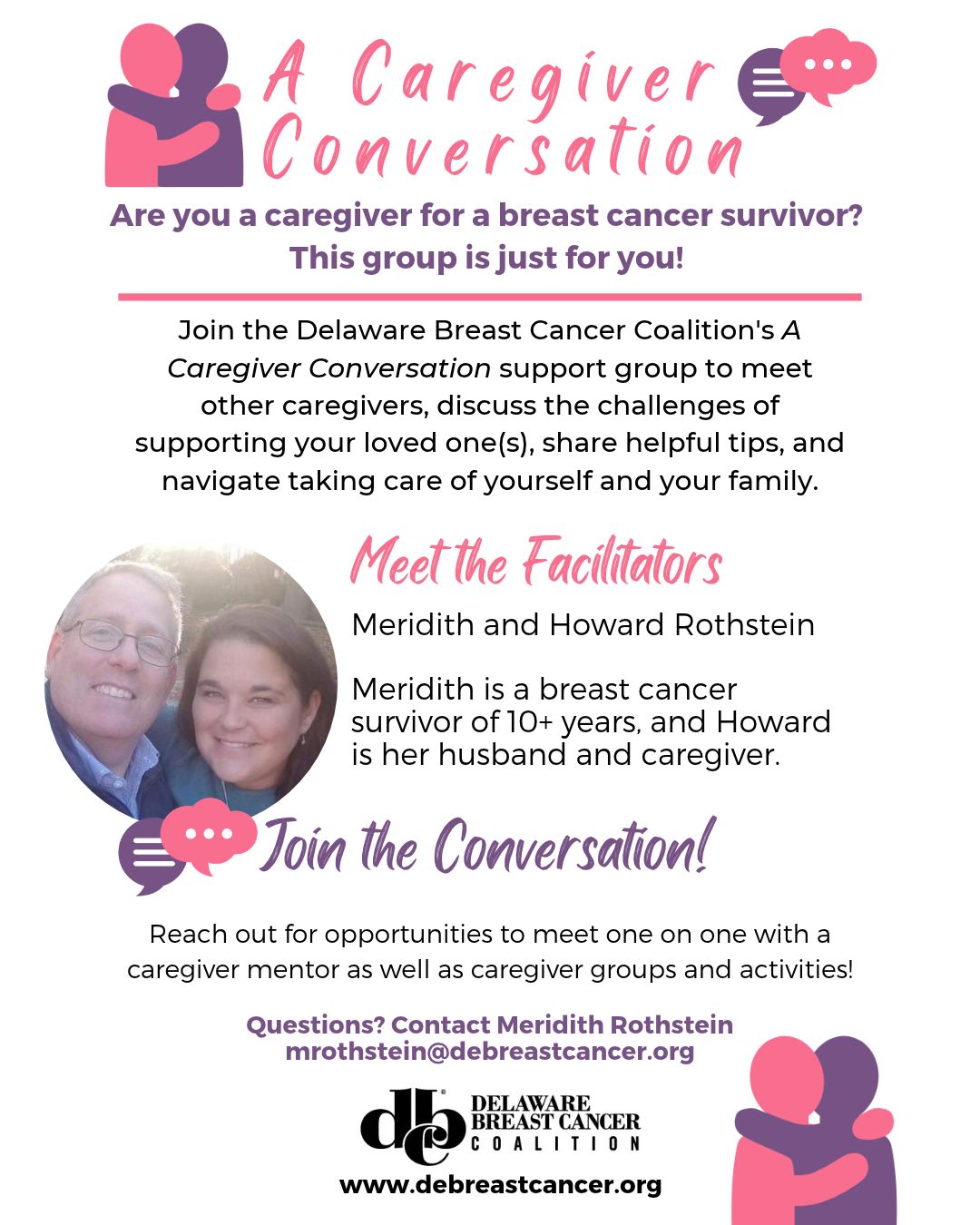
Join the Delaware Breast Cancer Coalition’s A Caregiver Conversation support group to connect with other caregivers who understand the unique challenges of supporting a loved one with breast cancer.
Facilitated by Meridith and Howard Rothstein, the group offers a welcoming and understanding environment rooted in lived experience. Meridith is a breast cancer survivor of more than 10 years, and Howard supported her throughout her journey as her caregiver. Years later, Meridith cared for Howard during his own battle with cancer. Together, they bring compassion, insight, and firsthand understanding to conversations surrounding caregiving, survivorship, and emotional support.
This supportive group provides space to:
- Meet and connect with fellow caregivers
- Discuss the emotional challenges of caregiving
- Share helpful tips, experiences, and encouragement
- Learn healthy ways to manage stress and avoid burnout
- Balancing caregiving responsibilities with personal and family needs
- Focus on caring for yourself while caring for others
Caregiving Reminder:
Often, emotional support matters more than having the “perfect” words. Listening, showing up consistently, and simply being present can help patients feel supported and less alone.
Caregiving Tips:
Small acts of support can make a meaningful difference for someone navigating breast cancer treatment and recovery. Caregivers, family members, and friends may help by:
- Preparing meals or organizing meal support
- Providing transportation to appointments and treatments
- Assisting with household chores and errands
- Running errands (groceries, school pickup, etc.)
- Offering companionship during treatment days
- Checking in regularly with encouraging messages or visits